Tuesday, June 26, 2018

When baseball teams travel East they need to battle fatigue and jet lag


Every year the Seattle Mariners fly more miles than any Major League Baseball team. Seattle is the furthest away from other Major League Baseball cities. Flying to the Pacific Northwest, where the Mariners play, requires the most miles and the longest flights.

According to stadiumwiz.com, Coors Field, where the Colorado Rockies play, is the park closest to Safeco Field, the home of the well traveled Mariners. Coors Field is 677 miles from Safeco Field.

Additionally, the American League West, the division where the Mariners play, is the division where teams are most spread out from each other. The American League West features teams in Washington state, California and Texas. So, even when playing division games, the Mariners must fly many miles.

According to stadiumwiz.com, the Mariners must travel 40,815 miles this season. The Oakland A's, Los Angeles Angels, Houston Astros and the San Diego Padraes travel the next most amount of miles.

The Chicago White Sox, Milwaukee Brewers, Pittsburgh Pirates, Detroit Tigers and the Cincinnati Reds travel the least amount of miles. Although the Reds travel the least amount of miles, they are in last place in their division. In contrast, the Mariners are in playoff contention.

Nevertheless, jet lag is an issue for athletes. Since the Mariners travel the greatest amount of miles, they are more susceptible to jet lag, which could effect an athlete's performance.

Rachael Lallensack, of sciencemag.org, says that "Jet lag is known for its fatigue- inducing effects, most of which stem from a mismatch between a person's internal clock and the time zone he or she is in, something called 'circadian mismanagement.' This misalignment is especially strong when a person's day is shorter than it should be - which happens when people travel East - previous research has shown." So, when the Mariners and other western teams travel East, they may get fatigued ,which could put them at a disadvantage. Lallensack emphasized that a new study shows that pitching and base running may be the most effected by the fatigue.

Lallensack points out that Ravi Allada, a neurobiologist at Northwestern University in Evanston, Illinois, examined 10 years of baseball statistics from 1992 to 2011. The study showed that teams that traveled East for a new series had worse offensive and defensive stats than the team that was already there and did not have to play right after arriving East.

Lallensack says that even home teams that travelled back East sometimes played differently. She says "Home teams played less aggressive offense after traveling, especially if they had just traveled East. In such games, players were less likely to attempt doubles, triples and stolen bases, all of which require bolder base running." Perhaps, the fatigue from traveling East effected a team's approach and their assertiveness on the basepaths.

In an interview with Fox32 News, Allada says "What we found were jet lagged pitchers gave up more home runs and this effect was large enough to essentially erase any home field advantage that a pitcher might have." So, after returning home, a team's starting pitcher did not necessarily have a home field advantage.

In order to counteract this problem, Allada suggests that "a pitcher could be sent out early to the destination of where they're going to pitch their next game. That allows their internal clocks to adjust to the new time zone and hopefully mitigate the effects of jet lag." This is one way for a starting pitcher to counteract jet lag and fatigue.

Allada references the 2016 National League Championship Series to support the findings of their study. Allada points out that Los Angeles Dodger pitcher Clayton Kershaw shut out the Cubs in Los Angeles in game 2. However, in game 6, after returning to Chicago from Los Angeles where game 5 was played, Kershaw gave up 2 home runs and was not effective. Allada says "This is sort of what our research would have predicted." Allada does not totally attribute Kershaw's ineffectiveness in game 6 to fatigue and jet lag, but believes it could have been a "contributing factor." This may be an example that supports Allada's findings.

Allada points out that the Dodgers "could have sent Kershaw to Chicago earlier so he could adjust his clock and get ready for that game." Perhaps, the Dodgers and other Major League Baseball teams will consider doing this in the future.

Allada believes that baseball teams are aware of the effect of jet lag on a team's performance. He hopes that his research will encourage teams to try to offset potential jet lag and travel related fatigue in the future.

Wednesday, June 20, 2018

Reggie Jackson hits three home runs on three consecutive pitches


Reggie Jackson was one of my first favorite players. I can recall going to the Oakdale Mall with my family and friends in 1980 and getting a Reggie Jackson baseball card in a pack of cards. I remember the pride of getting a card of Reggie Jackson. I bought a replica New York Yankee hat at the mall as well. I painted #44 on the back of the helmet.

Reggie Jackson was meant to play in New York. He was made for the bright lights. He was suited for the city that never sleeps. Reggie Jackson was meant to be a Yankee. The excitement and fanfare that accompanied playing in New York fit Jackson perfectly.

Jackson was quotable. He was good for the New York media, which is always looking for a story. He once predicted that if he played in New York, they would name a candy bar after him. They did. The "Reggie" bar was unveiled in 1978. It had peanuts and caramel and it was covered in chocolate.

Jackson created controversy. When he joined the Yankees, he said he was the "straw that stirred the drink." He implied that he would be the new leader for the Yankees. However, Thurman Munson was the captain of the team. He was well respected in the Yankee locker room. Some of the players resented Jackson's attitude and wanted Munson to remain the leader of the team.

Jackson was brash and confident. When he was asked if it bothered him that fans booed him, he said "fans don't boo nobodies." He took the boos as a compliment. He felt the boos were a sign of recognition of his importance to the Yankees and to baseball.

Jackson was a polarizing figure. When he batted on the road, he was always booed. When he batted at home, he was booed at times and cheered at other times. The Yankee fans had a love/hate relationship with Jackson.

Jackson was social and engaging. He was a part of the New York night life. He was a part of the New York scene. He was often seen out on the town with a girl fiend or friends. He embraced New York city.

Jackson spent five years playing for the Yankees. I remember when he left as a free agent for California. The Angels were willing to make him an every day outfielder, whereas the Yankees wanted him to play part of the time in the outfield and serve part time as a designated hitter. Jackson wanted to continue to play the outfield, so he signed with California.

He actually played in more games with California than New York. However, Jackson was meant to be a Yankee. Many identify him as a Yankee. He entered the hall of fame as a Yankee.

On October 18th, 1977, in game 6 of the World Series, Reggie Jackson hit three home runs on three consecutive pitches.

Keith Jackson, Howard Cosell and Tom Seaver called the game on television.

Jackson stepped up to the plate and smashed an offering by Hooton into the upper deck in right field. Keith Jackson said "Long fly ball to right field... It is.." Then Cosell interjected by saying "Goodbye! A big, big World Series for Reggie Jackson. Despite all the blather about his discontent with Billy Martin as he comes up with his third home run of the series. Quickly, the Yankees go ahead."

The "blather" that Cosell was referring to was the arguing that had happened between Jackson and manager Billy Martin. Both Jackson and Martin had strong personalities and they would often clash.

In his second at bat, Jackson stepped up to the plate and hit a pitch from Elias Sosa into the right field seats. Keith Jackson said "Hard shot, right field, It's gone." Exuberantly, Cosell said "Oh, what a World Series for Reggie Jackson. First pitch, right in his wheel house as Tom Seaver would say. Reggie Jackson, now well on his way to becoming the Most Valuable Player in the 1977 World Series if the Yankees go on to win." Keith Jackson followed up by saying "Reggie Jackson has seen two pitches tonight in the strike zone. Two. And he has has hit both of them in the seats." Jackson and Cosell did a good job of combining on the call. For the first two home runs, Seaver had been silent. Only Jackson and Cosell had spoken.

In Jackson's third at bat, the Yankees' fans were standing and clapping. They may have anticipated another home run. In any event, they knew it was a memorable evening in the Bronx.

Charlie Hough was on in relief. He got the sign from Dodger catcher Steve Yeager and was ready to pitch. He threw a slow curve ball that dipped close to knee level. Jackson promptly hit the ball to the deepest part of the ball park. The ball landed in the black section of centerfield and bounced up for a lucky fan who retrieved the ball.

On the call, Keith Jackson said "High.." And then, in unison, Seaver and Cosell exclaimed "Goodbye!" Cosell said "Forget about who the Most Valuable Player is in the World Series. How this man has responded to pressure. Oh, what a beam on his face. How can you blame him?" Then, hyperbolically, Cosell added "He's answered the whole world!" Cosell certainly appreciated Jackson's accomplishment.

After the third home run, Seaver said "Reggie Jackson's last at bat probably in the 1977 World Series. And that was a monster in itself. 475 feet, probably." The home run was to the deepest part of Yankee stadium and it was probably between 450 and 475 feet.

As Jackson was being congratulated in the Yankee dugout, Cosell continued by saying "What are they thinking now? After all the furer. After all the hassling. It came down to this. A whole long season." Cosell tried to put the moment into perspective. He wanted fans to appreciate the drama that had taken place during the season.

As the fans chanted "Reggie," the proud slugger came out for a curtain call and lifted up both hands and faced the appreciative crowd. He mouthed the words "thank you." It was a memorable moment for the fans of the Yankees. It was a memorable moment for the Yankees' players and the organization.

In an interview with Chris Russo, of Sirius Radio in 2009, Jackson remembered the evening. Jackson said "I had a great batting practice that night. In batting practice that night, I hit the last five minutes and I probably took 50 swings and had to hit about 35 baseballs in the stands." Jackson also emphasized that he had been swinging the bat well in Los Angeles for the previous three games. So, Jackson had a lot of confidence entering game 6.

Jackson said that he had been walked in his first at bat in game 6. Hooton pitched around him because no men were on base. However, in the second at bat, Hooton had to pitch to Jackson because there were two men on base. So, he did not want to walk Jackson again. He had to throw strikes. This meant that Jackson would get a good pitch to hit.

Regarding his second at bat against Hooton, Jackson said "The scouting report on me was to pitch me in, so during post season they're going to stick to the scouting report. So, I'd look for the ball in and prayed that he'd throw a strike. He threw me a strike. He threw me a strike and I hit it out." So, Jackson was ready and he anticipated what pitch Hooton would throw. He responded with a good swing and a home run.

Jackson also explained his second at bat to Russo. Sosa had entered the game in relief. Jackson said "Next time up, I got lucky. A new pitcher came in. He wanted to follow the scouting report. I hadn't hit his fastball yet. He hadn't made an attempt to get the ball in so he took his shot. He threw me a strike. I hit it out." So, Jackson thought the first two pitchers would follow the scouting report. Therefore, Jackson correctly anticipated what pitch he would receive.

For the third home run, Jackson, again, faced a new pitcher. Jackson said "And the next guy came in. Charlie Hough. And I'd had a tremendous record against Wilbur Wood and several knuckle ball pitchers." Jackson added that maybe the Dodgers' organization did not know that he did well against knuckle ball pitchers. After, Hough's name was announced as the new pitcher, Jackson knew that he had a chance to hit another home run.

Jackson's three home runs on three consecutive pitches in game 6 of the 1977 World Series was one of the signature moments of his career. The Yankees clinched the World Series with the game 6 win, and Jackson was named the Most Valuable Player of the World Series. It was one of the most memorable nights in the history of the New York Yankees and of Major League Baseball.


Wednesday, June 13, 2018

Free agency allows super stars to chase a title


Fans expect a superstar to win multiple titles. However, fans also expect a superstar to carry a team to a championship. Superstars feel pressure to put themselves in position to win multiple championships. However, fans also want super stars to prove that they can do it without other great players.

Superstars like Lebron James and Kevin Durant are in an impossible position. They are expected to chase titles, but be the alpha players on their team. It is difficult for James, Durant and other super stars to fulfill both expectations simultaneously.

Judging superstars by how many titles they win started with Michael Jordan's career. After Jordan lead the Chicago Bulls to 6 NBA championships in his final 6 complete years with the Bulls, his championship pedigree became the barometer by which other superstars are measured.

Kobe Bryant won 5 championships with the Los Angeles Lakers, but he hoped to win one more so that he could equal Jordan's 6 titles. However, Bryant's 5 championships with the Lakers became the silver standard for modern players, while Jordan's 6 championships remains the gold standard.

Of course, Bill Russell won 11 championships with the Boston Celtics in 13 years. His championships are the true gold standard, but most modern fans refer to Jordan's 6 titles when they evaluate James, Durant and other superstars. However, sometimes Wilt Chamberlain's career is compared to Russell's with fans often saying that Russell was better because he won more championships.

Some fans are quick to point out that Oscar Robertson won one title in 1971 after the Milwaukee Bucks drafted and developed Kareem Abdul Jabaar. Fans are also quick to point out that Jerry West's Lakers finally beat the Boston Celtics after former Celtic Bill Sharman guided the Lakers to West's only title. Others remember that Elgin Baylor, despite an excellent career with the Lakers, never won a title.

At the end of their careers, Karl Malone and Gary Payton joined the Lakers in an unsuccessful attempt to win a championship. Malone lead the Utah Jazz to a Western Conference Championship. Likewise, Payton lead the Seattle Sonics to an NBA finals appearance. Both teams lost to the Bulls.

Much is made of Charles Barkley's inability to win an NBA championship with the Philadelphia 76ers, Phoenix Suns and the Houston Rockets. However, Barkley lead the Phoenix Suns to an NBA title appearance against the Chicago Bulls in 1993. The Bulls won in 6 games.

Most fans give Barkley, Malone, Payton and Baylor their due. Most fans understand that they had excellent careers despite their inability to win a NBA championship.

Through collective bargaining, NBA players have the right to free agency. It makes sense that athletes have the right to decide where and for whom they want to work. Otherwise, the owners would have all of the power. Free agency gives the players negotiating options and bargaining rights. Free agency makes sense from the standpoint of labor.

However, there is a downside to free agency. There is a downside to players changing teams. NBA players draft and develop players only to lose them to another team. Players lack loyalty to one team or one city. Players are willing to go from one team to another. Sometimes players leave a team for a rival. Many have pointed out that free agency puts a strain on fan loyalty.

While playing for the Oklahoma City Thunder, Kevin Durant lead the team to the Western Conference Finals against the Golden State Warriors. The Thunder lead the Warriors 3-2 before the Golden State came back and won the series. The Warriors lost the NBA championship to the Cleveland Cavaliers that year. Following the Championship, Durant signed with the Warriors, the team that he tried to beat only a couple of months earlier.

Durant's decision shows that some players are willing to forgo loyalties to put themselves in a better position to win. Others dispense with loyalty to make more money. Either way, free agency puts a strain on fan loyalty. Some fans may ask "why remain loyal when the players leave for another team?" It's a fair question.

Durant's decision to join Golden State reflects the quandary that superstars face. Should they stay with one team and be patient? Or should they go to a team in a better position to win? Obviously, the greater challenge is to stay with one team and be patient as the team continually improves and moves towards a championship. However, super stars may feel that they need to win a championship for their legacy.

Durant is a free agent again. Should he leave Golden State now that he won two championships with them? Should he go to a team where he can be the unquestioned leader? He will never be the unquestioned leader with the Warriors. Steph Curry, Klay Thompson and Draymond Greene will always have one more championship with Golden State than Durant will. Curry, Thompson and Greene were drafted and developed by the Warriors. By contrast, Durant was drafted and developed by Oklahoma City. Durant was signed as a free agent by Golden State. He will probably never be as popular in Golden State as Curry, Thompson and Greene.

If Durant goes to a team that he can call his own, it may be better for his career. If he goes to a team that he can lead to the finals, it would add to his legacy as a player. It would also be a greater challenge than it would be to re sign with Golden State. Obviously, where Durant goes is up to him. He has the right to decide.

Durant could consider going home to Washington to play for the Wizards. Durant grew up rooting for the Wizards. However, the Wizards do not have the cap space to sign Durant and he showed no interest in signing there two years ago. Washington would have to trade Otto Porter Jr. to create cap space. However, it would be a good story if Durant went to Washington to lead his home town team to a potential Eastern Conference Championship. It would parallel James' success in Cleveland.

Of course, the analogy between Durant and James is not perfect. James was drafted by Cleveland and went back there after four years with Miami, whereas Durant was drafted by Oklahoma City. In any event, the Wizards would have to make a couple of trades to create enough cap space.

Durant could consider going to the New York Knicks. They could consider trading Tim Hardaway, Jr. to create cap space. However, it's unlikely that another team would trade for his contract which has 54 million dollars left over the next three years. Durant could partner with Krystal Prozingas to form a tough front line. It would be a challenge for Durant to bring success back to the big apple. In any event, Durant has shown no interest in going there. So, it's unlikely to happen.

James lead the Cleveland Cavaliers to the 2007 NBA finals where they were promptly swept by the superior San Antonio Spurs. James sighed with the Miami Heat before the 2010-11 season in order give himself a better chance at a championship. The Heat won the Eastern Conference Championship for four straight years. They won the 2012 and 2013 NBA championships.

After proving he could lead a team to an NBA championship, James decided to return to Cleveland after the 2014 season. Since then, James has lead the Cavaliers to four straight Eastern Conference Championships and an NBA title in 2016. It was the first professional championship in Cleveland since 1964 when the Cleveland Browns won the NFL championship.

Now, James is a free agent again. Will he stay in Cleveland or will he go somewhere else? Will he go to the team that has the best chance of winning a championship? Or will other factors help him decide where to go?

There is no ideal fit for James. If he goes to Philadelphia, Joel Embid and Ben Simmons, two young and developing players, may resent playing in James' shadow. The 76ers belong to Simmons and Embid. They will never truly be James' team. However, the Cavaliers are James' team. He is the on court leader of the team.

If James goes to Houston, he will have the share the basketball with James Harden and Chris Paul, two players who like the have the basketball in their hands. James is a facilitator, which is similar to the role that Paul plays. Also, James can create his own shot just like Harden can. How will James fit with Houston? James knows that he fits well in Cleveland, but it is uncertain how well he will blend with Harden and Paul.

Some have suggested that James may go to Los Angeles to play with the Lakers. This could happen if Paul George and Carmelo Anthony go there. However, even if James, George and Anthony sign with the Lakers, they may not be good enough to compete with Golden State.

James could consider going to San Antonio. He could play alongside La Marcus Aldridge and Kawai Leonard if Leonard re signs with San Antonio. Aldridge could play center, with James and the power forward and Leonard at the small forward. James could serve as a point forward because of his ability as a facilitator and passer. If James does leave Cleveland, San Antonio could be the logical destination.

As always, players will have interesting decisions to make this offseason. Championships are won during the season. However, championship teams are put together during the offseason.


Wednesday, June 6, 2018

Did Babe Ruth call his own shot?


In the 5th inning of game 3 of the 1932 World Series between the Chicago Cubs and the New York Yankees, Babe Ruth hit his final post season home run for the New York Yankees. It was his 50th home run in 41 post season games for the Bronx Bombers. This was arguably his most memorable home run because of the context of the home run and the debate that ensued.

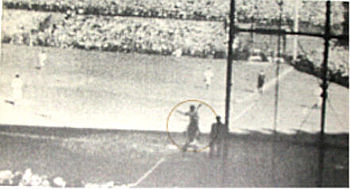
Ruth hit the home run to center field. Prior to the pitch, legend has it that Ruth pointed to where he would hit the home run. There is no question that Ruth pointed with his right hand before he hit the home run. Pictures confirm that Ruth extended his right hand and pointed towards something. However, people debate whether he predicted a home run to center field or if he was pointing to the Cubs' fans to remind them that he had only two strikes.

Baseball writer Donald Honig described the scene. Honig said "The yelling from the Cubs dugout was positively sulfurous as well as from the fans. They were in on this. This was a Chicago crowd. And they were throwing things and yelling. Ruth was standing in the batters box, yelling back at them between pitches." So, the Chicago crowd created a hostile environment for Ruth. The Cubs' players in the dugout also heckled Ruth. Likewise, Ruth yelled back at them.

After a couple of strikes were called on Ruth, the fans continued to jeer him. Honig said "The volume coming from the stands was so loud that some of the Cubs players were coming out of the dugout and cupping their hands around their mouth to make sure that Ruth heard them. Then he makes his his famous gesture." So, the taunting and the jeering increased with each strike. This increased heckling added to the drama and excitement of the at bat.

Babe Ruth described the situation in the following way. Ruth said "Ill never forget it. It was a tough series. Both clubs were riding each other, doing everything to get each other's goat. Well, in this one particular time, when I went up to bat, Charlie Root was pitching. And the first pitched ball was a called strike. Well, I thought it was outside and didn't like it very much." So, not only was the Cubs dugout and crowd jeering Ruth, but he fell behind in the count. So, the jeering and taunting was getting louder.

After taking the second strike, Ruth says "Well, I stepped out of the box and by that time they were over there going crazy. I looked out at center field and I pointed. I said I'm going to hit the next pitched ball right past the flag pole. Well, the good Lord must have been with me." Ruth maintained that he called his home run. He asserted that he predicted where he would hit the next pitch.

Billy Herman, a player for the Cubs in this game, provided a rebuttal to Ruth's claim. Herman said "Gabby Hartnett was the catcher. He was right there. He knew what was going on. He said "No, he wasn't pointing to the stands. He was pointing to the fans and he called them back to the bench because they were riding him pretty hard. He just pointed two fingers to the dugout and said 'that's only two strikes.'" Herman's words seem persuasive because Hartnett would have had the closest perspective . He would have heard Ruth's words and possibly seen what direction Ruth was pointing.

Through the years, Ruth's family has maintained that he predicted the home run. However, Ruth was less adamant over time. Ruth said that predicting the home run would have been showing up the pitcher and that Root would have responded to the slight. Still, at times, Ruth tried to maintain his original narrative. Perhaps, Ruth thought his original story was good for baseball and his own legacy.


Ed Sherman, of the Chicago Tribune, wrote a book about Ruth's home run entitled "Babe Ruth's Called Shot." Sherman addresses issues associated with the home run such as the coverage of the home run, video footage and modern day opinions of the home run.

When discussing how the newspapers covered the story, Sherman refers to a piece written by John Evangelist Walsh for Sports Illustrated in 1965. Walsh looked at 38 sports writers who wrote for 27 different newspapers. Walsh concluded the following: "Viewing the 38 sports writers as a group, without regard for the weight to be assigned each, the most striking fact is the way they split almost equally on the question. While 21 have nothing to say about a Called Shot, 17 others either definitely record Ruth's pointing to the stands in centerfield, or in some manner strongly imply a similar prediction."Walsh thinks it's possible that some writers did not mention the Called Shot because they did not see it.

Richards Vidmar, of the New York Herald Tribune, said that Ruth responded to the "boos, hisses and jeers" of the Cubs' fans and that after two strikes were called on Ruth, he "held up two fingers and still grinned, the super showman." Vidmar does not suggest that Ruth called his home run.

John Drebinger of the New York Times said "A single lemon rolled out to the plate as Ruth came up in the fifth inning and in no mistaken motions the Babe notified the crowd that the nature of his retaliation would be a wallop right out of the confines of the park." So, Drebinger suggests that Ruth hit the home run in response to the taunting of the crowd. He suggests that Ruth predicted his home run.

Irving Vaughn, of the Chicago Tribune, said Ruth responded to the taunting from the Cub's dugout after getting two strikes by saying "That's only two strikes , boys. I still have one coming." Vaughn also said that Ruth held up two fingers. So, Vaughn suggests that Ruth did not call his shot, but simply reminded the Cubs' dugout that he had only two strikes.

Westbrook Pegler, of the Chicago Tribune, said that Ruth responded to Guy Bush, a Cubs pitcher who was in the dugout taunting Ruth. According to Pegler, "the Babe laughed derisively and gestured at him 'Wait, Mugg, I'm going to hit one out of the yard.' Pegler continues by saying "It was a privilege to be present because it is not likely that the scene will ever be repeated in all its elements. Many a hitter may make two home runs or possibly three in World Series play in years to come, but not the way Babe Ruth hit those two. Nor will you ever see an artist call his shot before hitting one of the longest drives ever made on the grounds in a World Series game, laughing and mocking the enemy with two strikes gone." Pegler suggests fans will never see a performance like Ruth had in this game. Pegler not only believes that Ruth called his own shot, but that no one will be able to do this again. Pegler suggests Ruth's homerun was not only unprecedented, but will never be equaled.

Paul Gallico of the New York Daily News, said "The Babe now held up two fingers and shoot them so that they seemed to reach right into the Cubs' dugout. And this time it was probably the most daring gesture ever made in any game, because it meant that he intended to knock the next one out of the park." Gallico saw the gesture as unprecedented and courageous. He believed that Ruth was confident that he would hit a home run on the next pitch.

Sherman did a good job of collecting different viewpoints from different sports writers who wrote about the home run. No one knows why each writer had a different view. Did some writers exaggerate the accomplishment? Did some writers fail to appreciate the magnitude of the moment? It's difficult to know what interpretation or viewpoint is the most accurate. The different view points add to the drama surrounding Ruth's home run.


Matt Kandle, an amateur photographer/videographer, provided footage of Ruth's 1932 home run. This footage survives today and provides some insight into Ruth's home run.

Kirk Kandle, Matt's grandson, grew up seeing footage of the home run through his family's home movies. Kandle says "I had seen it so many times. I'm sure he pointed at the fence. It never dawned on me that there were questions about Babe calling his shot. I never heard anything else other than the legend." After viewing the home run many times, Kandle believes that Ruth called the home run. He seems convinced that the story about the home run is true.


Kirk Kandle began contacting sports writers about the footage in 1975. He wanted to convince sports writers that Ruth did indeed call his own shot. He contacted Paul Borden in 1975; Robert Creamer of Sports Illustrated in 1976; and the Louisville Courier Journal in 1978. Kandle wanted sports writers to have access to the footage that he grew up with.

Additionally, Kirk Krandle recalled a conversation that he had with Earl Combs, a hall of fame outfielder with the Yankees. Combs, a teammate of Ruth's for many years including 1932, believed that Ruth called the home run.

Kirk Krandle made a key point to Sherman about the footage. Regarding the footage, Sherman says "Krandle did capture the two moments that likely show how the tale of the Called Shot was set into motion. The first produced the famous still of Ruth extending his arm and pointing. The pitch, a ball, dribbles past catcher Gabby Hartnett. This is a key point. Ruth starts to make his gesture here with Hartnett's back turned. The Cubs catcher steadfastly denied that Ruth called his shot, but we can see that he didn't see it all." If Hartnett's back is turned, how could he possibly know that Ruth did not call his shot? Perhaps, he could hear what Ruth said, but he could not tell in Ruth was pointing to the Cubs' dugout or the center field? If he was pointing to the pitcher or centerfield, then it's possible that he called his shot. Hartnett would not be able to conclusively say that Ruth did not call his shot.

Sherman says "Kirk and I watched replays of the Called Shot several times at slower speeds. Even then, it's hard to determine the exact nature of Ruth's gestures." The footage is inconclusive. Whether Ruth called his own shot or not remains uncertain.

Sherman points out that John Thorn, the current official historian of Major League Baseball, has the same opinion that Sherman has. Thorn cannot say conclusively whether or not Ruth called his own shot.

Sherman points out that Don Bell, of the "Village Voice", believes that Ruth did indeed call his shot. Bell says "The conclusion? After watching the film some 20 times at various speeds and stopping it at will, there's no doubt in my mind that Ruth actually called his shot four times. Twice in the first sequence, which was more of a general statement of intent than a prediction, and more definitely, more precisely, in the two cocking-the-gun-and-shooting gesture just before Root hurdle the ball." So, Bell actually believes that Ruth called his shot multiple times, not just once. Bell seems convinced about something that many are uncertain about. Nevertheless, Bell's opinion is interesting and unique.


Sherman asked many modern day baseball observers what they thought about Ruth's home run. Their opinions, like those of historians and latter day sports writers, differed from each other.

Bob Costas said "I never saw anything that was 100% percentage conclusive. There's no question he is doing something, and there is some bravado. I would infer from the bravado that he was saying 'I'll show you.' That's different from saying 'I'll show you, and I'm going to hit the next pitch into the center field bleachers.' We would like to believe that. We just don't have the evidence to back it up." So, Costas believes the evidence is lacking. Costs acknowledges Ruth's confidence, but not his possible prescience.

George Will suggests that Ruth did not call his own shot because he "never unequivocally said he did." So, Ruth's own ambivalence may suggest that the story was exaggerated. Will also says "If he had pointed to the center field seats, the pitch he was vowing to hit there would have hit him". Will points out that Root may have thrown at Ruth if he felt he was showing the pitcher up, which would have violated an unwritten rule of baseball. When a pitcher is shown up, he or his team will often retaliate by throwing at the hitter. As far as we know that did not happen.

Leigh Montville said "I don't think he called his own shot as if he was going to hit a homer to a specific spot. But he was pointing that he was going to hit the ball a long way. It was fortuitous the way it worked out." So, Montville believes that Ruth confidently stood up to the Cubs and their fans, but did predict his home run. Montville points out that Ruth "could be brought into confrontations easily throughout his career. He was always yelling and carrying on." Ruth had a loud and boisterous personality that lent itself to confrontations and arguments. He may simply have been arguing with the Cubs and their fans.

Baseball historian Bill Jenkinson says "It's the single most transcendent moment in baseball history. I believe he called his shot." Jenkins seems so certain that he sees the moment as not only noteworthy, but "transcendent." Jenkinson explains "The problem in believability is the issue of location. Nobody, including Ruth, could point to a spot and say 'I'm going to hit a home run there.' That was always the problem with the legend." However, Jenkins says that if people dismiss the idea that he predicted the location of his home run, then the story of the Called Shot is true. Jenkins says "I'm glad the research took me down this path. Previously, I had been a naysayer. But the data's there. It's overwhelming." Jenkinson has a website for his findings entitled BabeRuth1932.webs.com.

Tim Wiles, director of research for the Baseball Hall of Fame in Cooperstown, was strongly influenced by a talk given by John Thorn, the official historian of Major League Baseball. Wiles says "John Thorn gave a talk here. He's very good with words. He said something like 'It doesn't matter whether Ruth called his shot. What matters is that we're still talking about it.' The fact that we are still talking about it indicates what sort of person Babe Ruth was, and that it is entirely plausible that he could have called his own shot. He had that outsized talent and personality to be able to do what he said he was going to do." Wiles suggests it's possible because of Ruth's talent and personality. It shows the respect that Ruth earned throughout his career.

Michael Gibbons, the Executive director of the Babe Ruth birthplace and museum, says that Ruth "orchestrated the whole thing. He took two called strikes to make it more dramatic. He challenged them, and he delivered. As he rounds the bases, he's clearly saying 'See I got you.' He called his shot through those gestures and the dynamic of the moment. I just don't think he called his location." Gibbons believes that Ruth intentionally made the moment more dramatic by taking a second strike. Like Jenkinson, he does not believe that Ruth pointed to the specific location of where he would hit the baseball. However, he believed that Ruth called his shot.

Tom Verducci, of Sports Illustrated, says "We've mapped the moon and the human genome. A little uncertainty, even mythology, is good for the soul in this age of hyper analytics. I don't know if Babe Ruth really called his home run in the 1932 World Series, and I'm okay with not knowing." Verducci is comfortable with the uncertainty. Perhaps the uncertainty adds drama and fun to the debate.

Verducci adds "Belieiving he called his shot - and Ruth seemed to encourage this belief as time went on, recognizing the value of the story- is more fun than believing he didn't." Verducci suggests that many people want to believe that Ruth called his shot. People may want to believe that a legendary figure did something legendary.

Buster Olney, of ESPN, says "I don't think Ruth called his own shot based on the moving images we have. If he was standing in the box and pointing toward the centerfield fence, as if to take note of something in the distance, I think he would've raised his hand and arm much higher." Olney seem skeptical that Ruth predicted his home run. However, Olney says "I have always loved the images of Ruth talking down the Cubs' bench as he rounds the bases." Even if he doubts that Ruth called his own shot, Olney respects the drama of the moment.

Sportswriter Roger Snell says " When you see it, even in slow motion, it's not conclusive...Ruth is yelling at the dugout. To me he's responding to the third base side." So, Snell thinks Ruth was responding to the Cubs dugout." Snell also questions why the debate has lingered so long. Snell says "Why it has lived so long is amazing to me. Hartnett and Root, who had their views, were as honest as can be, but so was Lou Gehrig. Why would he lie and say the opposite?" So, Snell believes that the opinions or Hartnett, Root and Gehrig should hold sway.

Jonathan Eig, author of a biography on Lou Gehrig, says "Gehrig was on the on deck circle. He was closer than anybody but the pitcher and catcher. He initially said it didn't happen. I always take the most credence in what somebody I initially says. As the myth began to grow, Gehrig went along with whatever everyone wanted to believe." Eig places confidence in Gehrig's initial response. Gehrig's initial reaction makes Eig skeptical that Ruth called his shot.

Phil Rogers, of the Chicago Tribune, downplays Ruth's gesture. He says " While we all love great stories, I side with Charlie Root on this one. I believe Ruth's gesture was far less grand than it has become over the passing of time. More than likely, he waved his bat at Root after a quick pitch or for some other minor crime." So, Rogers believes the act before the home run has been exaggerated over time. Maybe he believes that the story has been embellished through the years.

David Fletcher, the founder of the Chicago Baseball Museum, is also skeptical. Fletcher says " In essence, the Babe Ruth Called Shot is a wonderful fable, but that's all it is - a fable. Put in the context of time, Ruth "calling" his homer could not have happened." Fletcher believes that it did not happen because Ruth would not have wanted to show up the pitcher. Fletcher believes that "Ruth was the game's greatest-ever showman, but he adhered to the age-old code of the game." Even though Ruth was dramatic, Fletcher believes that Ruth would not have showed up an opponent. Fletcher believes that if Ruth called his own shot, Root would have retaliated presumably by throwing a pitch at him. There is no record that Root tried to hit Ruth with a pitch.


Sherman says "In order to appreciate the totality of the Called Shot, you have to view it from two perspectives: reality and myth. Objectively, sure, you could knock holes in the legend." These are the two elements of the Called Shot. There is this healthy tension between "reality" and "myth." These two elements exist side by side as the story gets passed on to future generations. The uncertainty of how much is true and how much is untrue actually creates drama and interest.

Sherman says "The home videos show do direct evidence of him making the dramatic gesture that some claim he made. Fans in the stands and people in the press box interpreted Ruth's waving as a destination call. Once he delivered and the reporters wrote about it, then of course he called his shot." The actual footage does not show Ruth predicting the home run. However, many in the crowd may have thought that he called the home run or that he predicted that he would hit a home run. The newspaper reports that people read the next day suggested that Ruth called his shot.

Sherman also points out that "Ruth's initial comments don't indicate that he pointed, In his heart of hearts, he knew you couldn't hit a baseball to a specific spot or in the distance." It may have been impossible to hit the ball to a predicted location. Even for a talented batter like Ruth, it may have been impossible to hit the ball precisely where he wanted to.

Sherman says "If Ruth had pointed, all of his teammates would have recalled him boasting about it immediately after the game. Never one for bashfulness, he wouldn't have kept his achievement quiet in the clubhouse. Ruth bough into the story only after hearing it repeated many times. If people wanted to believe it, who was he to spoil a good tale?" In other words, if Ruth definitely called his own shot, more of his teammates would have corroborated the achievement. Also, Ruth would have consistently bragged about the accomplishment considering his gregarious personality. Instead, Ruth probably liked how the story embellished his reputation as a player.

Additionally, Sherman says "Is the story as good if Goliath defeats David in five rounds? Hardly. We need to believe that our heroes are capable of defying imagination by performing superhuman feats of excellence at a time when we most want them to deliver. The Called Shot was that moment for Ruth."

The story of Babe Ruth's Called Shot has been passed on over time. The story involves fact, fiction, myth and a legendary figure. Some express skepticism, while others express belief. Still others appreciate the interesting blend of fact and fiction; accomplishment and myth; and the combination of first hand accounts and historical interpretations.

The story has many elements to it. That's part of what makes the story so memorable and interesting.

It's likely that Ruth made some sort of confident and predictive gesture without actually predicting the exact location of his home run. He was verbally sparing with the Cubs dugout and their fans the whole game. The gesture occurred within the context of that ongoing verbal exchange. So, Ruth was trying to make a point to the Cubs players and fans. He probably reminded them that he had only two strikes on him and that he still had one more strike to give. Although, it is possible that he boasted that he would hit the next pitch for a home run. However, it's unlikely he predicted where he would hit it.

The story will continue to be told. It will continue to appeal to baseball fans and observers.

In any event, it's one of the many stories that comprise the fabric of baseball history. In Shakespearean fashion, the question remains: Did he or didn't he? That is indeed the question.

Wednesday, May 30, 2018

Ron Guidry's autobiography presents an insightful look into a good baseball career


Ron Guidry played for the the New York Yankees from 1975-1989. A good player, but not a hall of famer, Guidry is often overshadowed by more boisterous personalities such as Sparky Lyle, Goose Gossage, Reggie Jackson and manager Billy Martin. However, Guidry contributed a lot to the success of the Yankees during that period. His contributions will never be forgotten by Yankee fans and baseball observers.

His autobiography "Gator" chronicles some of the more memorable moments of his career and the friendships that he made. It also gives insight into his formative years and his family background.

The autobiography begins with the one game playoff between the Yankees and the Boston Red Sox in 1978. After 162 games, both teams had 99 victories. After a coin flip, it was decided that the one game playoff would be at Fenway Park, which sat 33,000 people. Additionally ,millions were watching and listening to the game on the radio. The game would go down in history because of the famous home run hit by Bucky Dent.

Guidry was the Yankees' starting pitcher for the one game playoff. Guidry says "Pitching in Fenway Park had never bothered me, honestly. Because of the Green Monster - the close, towering wall in left field - Fenway has a reputation for being tough on left handed pitchers. But I knew I couldn't change the way I pitched because of the wall."

The atmosphere for the game was good. Two rivals who had both won 99 games were going to play a one game playoff in an iconic stadium. Guidry says "That Monday, October 2, it was sunny and sixty-five degrees - perfect weather for baseball. It was a wonderful day for fans to come out and watch the game. Both sides had good hitting, good pitching, good defense. Games at Fenway are always special, given our long standing rivalry, but day games are even more so. Its baseball in its classic, purest form." The fans and the players were excited about the game. It would live up to its billing.

Guidry started strong. He says "In the first inning, I mowed down the first three batters. Two strikeouts, including one against Jim Rice, the MVP that season, whose forty-six homeruns led the league." His confidence grew after the first inning. He knew he could pitch well enough to help the Yankees win.

Although Guidry did not change his approach , he realized that he had to adjust his expectations for himself. He says " Most games, I had the mentality that I wanted to throw a complete game and shut the other team out. That day, against Boston's lineup, on short rest, I knew I just had to keep us in the game." Guidry knew the Yankees had a good bullpen that could help him if he struggled. He simply wanted to keep the Yankees in contention and hope that the offense could score enough runs to win the game.

Guidry gave up a home run to Carl Yastrzemski. Carlton Fisk stepped up the plate next. The crowd was getting louder and louder. Fisk hit a fly ball that the crowd thought may be a home run. However, the wind kept the ball in the ball park. In the next few innings, Guidry gave up more hits, but did not give up more runs. He was able to keep his team in the game. Guidry made it through 6 and 1/3 innings in three days rest. He gave up 2 earned runs.

Mike Torrez was pitching well for the Red Sox. In 6 innings, Torrez had surrendered only 2 hits and no runs. However, everything changed in the 7th inning after Chris Chambliss and Roy White both had singles, Bucky Dent stepped up to the plate in what would be the most memorable at bat in his career.

Dent fouled a ball off of his shin. He had injured his shin earlier in the year, so this foul ball made his injury worse. After he fouled the ball off, Mickey Rivers noticed that Dent's bat was broken, so he gave Dent a new bat. Guidry says it was good that Rivers noticed this because "Bucky was a long shot to get a hit to begin with, and nobody has a prayer with a broken bat." The new bat gave Dent a chance. And he made the most of his opportunity.

Then, Dent hit one of the most memorable home runs in Yankee history. Guidry says "Following the delay, the crowd was quiet. Torrez stepped back onto the mound and delivered a belt - high fastball, down the middle. Bucky connected...From the bench, we were all hollering "GO,GO,GO." This was what the Yankees needed. Down 2-0, with two runners on base a home run would give the Yankees the lead. Guidry says that the Boston crowd was quiet "as the ball disappeared behind the Green Monster for a home run." The Yankees took a 3-2 lead.

Guidry ran into trouble in the 7th inning. After striking out Butch Hobson, George Scott singled and Guidry was taken out of the game by manager Bob Lemon. Guidry did not want to leave the game. Thurman Munson and Guidry tried to convince Lemon to allow Guidry to stay in the game. However, Lemon turned the inning over to reliever Goose Gossage. The Red Sox did not score the in the inning.

In the top half of the next inning, Reggie Jackson hit a two run home run to give the Yankees a 5-2 lead. The Red Sox would add two twice to make the score 5-4. That would be the final score. The Yankees had won the one game playoff against Boston. They would go onto defeat the Kansas City Royals in the American League Championship Series and defeat the Los Angeles Dodgers in the World Series.

The Yankees' 1978 season was known for its drama. However, according to Guidry, the drama may have actually helped the Yankees. Guidry says "The way I see it, the 1978 Yankees didn't win in spite of what went down in that season. We won because of what happened. A team that is willing to fight - even one another - can go one of two ways - into the toilet or into greatness. A team that is afraid of conflict can settle into complacency. That was not us. We were a team with the potential to be great. And I believe that out of that craziness, we became a team that was both talented and fearless." So, in Guidry's view, the Yankees thrived off of the drama. The conflicts and controversies actually helped the Yankees to fulfill their potential.

In addition to his baseball career, Guidry discussed his Louisiana roots. When Guidry introduced George Steinbrenner to his parents, Steinbrenner tried rabbit stew - a dish made by his parents. Steinbrenner liked the meal so much that he asked Guidry to bring some to every spring training. After Guidry's career was over, he became a spring training instructor. Even as an instructor, he always brought some rabbit stew to sprint training for Steinbrenner to eat.

Guidry's father also cooked for him and his teammates when they played games in Texas. Guidry said, "All of a sudden, by 1978, he was hauling three hundred frog legs to Texas and practically the whole team was joining in." His parents' rabbit stew was a hit with Steinbrenner and the Yankees' team. Guidry was able to share his family's culinary talent with the whole team.

Guidry is very proud of his Louisiana roots and his Cajun heritage. Guidry says "I can't tell you who I am without giving you a taste of where I'm from. Louisiana made me who I was, who I am, who I will always be. My two nicknames - Gator and Louisiana Lightening- are fitting because they pay tribute to my Cajun upbringing and my home state." Guidry has a lot of pride in his heritage and the state that he hails from. He reminds all of us to be proud of our heritage and our home state.

Guidry also emphasizes his family's agrarian background. Guidry says "Most of my family were farmers. A lot of them farmed rice, some sugarcane. They didn't have a lot of money, and they lived off the land." Guidry's family grew multiple crops. They were close to the land. Guidry says "They hunted. They trapped. And even though I didn't grow up on a farm, I learned to help when we visited." Guidry's family seems resourceful and independent. They hunted for some of their own food and they grew some of their own food.

Hunting and baseball have been a part of Guidry's life for a long time. Guidry says "Once I picked up hunting and baseball, the two activities neatly divided my year. Winter meant hunting. Summer meant baseball." The two activities involved different skills, but both are big parts of Guidry's personality.

Guidry grew up a baseball fan. Baseball was a part of his life at a young age. He rooted for the Yankees as a youth before he ever played for them. Guidry says "I mean, I loved watching baseball, and was a big Yankee fan even as a kid.- they were the best team in baseball. The Mick, and Whitey Ford, Yogi Berra, and Roger Maris were my heroes." In light of his background as a Yankee fan, it must have been thrilling for the young hurler to be drafted and developed by the Bronx Bombers. It also must have meant a lot to him to spend his whole career with the Yankees.

Despite being able to live out his dream of pitching in the big leagues, success did not come easy for Guidry. He spent over four years in the minor leagues before he was able to stick in the big leagues. There were times when he wondered if he would ever get called to the big leagues.

For the first four seasons in the minor leagues, Guidry played for bad teams. He believed that playing for bad teams effected his performance. However, after four seasons on bad teams, he was promoted to triple A Syracuse - a good team. Guidry believes that playing for a good team made it easier for him to be successful.

The 1975 season, his first with Syracuse, was a break through season for Guidry. He says "It was 1975 when I finally learned how to pitch. I watched guys who threw ninety miles per hour get hitters out with ease. It's easy to just throw when you throw ninety-five miles per hour and can count on one hand all the people on this earth who can throw harder than you. Pitching is about harnessing and fine tuning what you're throwing, placing it on the corner. You can't be scared that the guy is going to hit it, because he's going to. And you want him to swing at it, but not have a great swing at it. You can't strike everyone out. But you can try and get everyone out." In 1975, Guidry learned the finer points of pitching. He improved his approach and his understanding of pitching. This would serve him well throughout his career.

In 1975, the Yankees called Guidry up to pitch in relief. In 9 relief appearances, Guidry had an era of 1.74. However, manager Billy Martin never put Guidry into the game during an important spot. Martin did not trust Guidry in an important situation, which upset and irked Guidry.

According to Guidry, Marin did not favor rookies. Guidry says "Of all the things that have been said about Billy Martin, the one that mattered to me was that he did not like rookies. And I was an inexperienced player. This didn't just mean that he didn't pitch me much. He didn't even talk to me." While Guidry had finally made it to the big leagues, he had to overcome Martin's bias against rookies.

After the following spring training, Guidry was sent down to the minors to make room for Ken Brett who had been acquired in the off season. However, Brett was traded in May, so Guidry was recalled to New York.

However, when he got back to New York, he hardly ever got into the game. He struggled with a 10.12 era. Martin and Steinbrenner were tough on Guidry. Steinbrenner wanted to know why Guidry was not pitching better. Eventually, Steinbrenner said "Guidry, you'll never be able to pitch in this league. Now, Guidry had to deal with Martin's bias against rookies and Steinbrenner's consistent criticism. Guidry believed in his abilities and the skills that he developed in the minor leagues, but he faced many challenges as a big leaguer.

Eventually, Guidry received an opportunity to start. The Yankees had just traded for Mike Torrez, who had to go home to Montreal before he joined the Yankees. So, the team needed a starting pitcher. Guidry was informed the day of his start that he would be pitching that night. Despite the short notice, Guidry pitched a gem. Guidry pitched 8 and 1/3 innings against the Seattle Mariners. He allowed no runs. The Yankees won the game.

About three weeks later, Guidry started against the Oakland A's. Guidry pitched well again. After two good starts, Guidry had established himself as a bona ride starting pitcher. He was earning more respect from the team and the organization. All of the hard work in the minor leagues was paying off.

There was a lot of drama with the Yankees in 1977. Much of the drama centered around Martin, Steinbrenner and Reggie Jackson. Guidry says "You'd hear shouting and high voices. Billy and George going at it in Billy's office. The slamming of the furniture. Then Reggie walking in and the three of them going at it. Not everyday, but often." Martin, Steinbrenner and Jackson had strong personalities which routinely clashed during the season.

In 1977,the Yankees played the Kansas City Royals in the American League Championship Series. After the team lost game one, Guidry started game two. He pitched a complete game as the Yankees won 6-2.

On only two days rest, Guidry was asked to start the decisive game 5. This was a questionable decision. As Guidry points out, it is a lot to ask a pitcher to start in three days rest, let alone two days rest. Guidry struggled through 2 and 1/3 innings and was taken out of the game after giving up 4 earned runs. He was replaced by Torrez who pitched 5 innings of shut out baseball. Lyle got the save, and the Yankees were going to the 1977 World Series.


The Yankees played the Los Angeles Dodgers in the 1977 World Series. Guidry's only start was game 4. Guidry wanted to do well after his struggles in game 5 of the American League Championship Series. Guidry says "The result was exactly what I'd hoped for. I went nine innings, gave up two runs again, same as game two of the ALCS, and I allowed only four hits." The Yankees won 4-2 and had a 3-1 lead in the series.

The Yankees won game 5 to win the series 4-1. In game 5, Jackson hit 3 home runs on 3 consecutive at bats. In all, Jackson hit 5 home runs in the series. Reggie Jackson was the MVP of the World Series and Guidry and the Yankees were world champions.

In the offseason the Yankees signed Goose Gossage. Guidry explained that this was difficult for Lyle, who had served as the team's closer. Steinbrenner wanted both Lyle and Gossage to be closers, but Guidry says "Goose became the lead closer for Billy, and Sparky was cast aside." Guidry liked Gossage, but was good friends with Lyle and found it difficult to watch Lyle's role diminished.

The off-season before the 1978 season was also notable because Guidry signed a new contract that gave him some financial security. He also knew that he had a guaranteed role with the team, which helped him to prepare for the season.

Guidry also knew he would be a starting pitcher in 1978. Guidry says "For a starter, the spring is important as a time to build up a different type of stamina. As the ace of the rotation, I was expected to go out there and throw nine innings." Guidry knew a lot would be expected of him as a starter. However, he believed he good pitch effectively as a starter for the Yankees.

Guidry got off to a good start. The Yankees won 3 of his 4 starts, and he had an era of 1.82. After 11 starts, Guidry was 10-0.


On June 17th against the California Angels, Guidry struck out 18 batters, which was one shy of the major league record. However, his 18 strikeouts were the most ever recorded by a Yankee pitcher in one game. Guidry got off to an average start and did not think he would be part of a record breaking evening. He said "Three strikeouts in two innings is a fine start, but that wasn't uncommon for me. And even though I struck out the side in the third, they were split by two singles. It hardly struck me as remarkable. Or the makings of a record - setting outing." However, as the game wore on, Guidry struck out more batters and the fans responded by getting louder and more vocal.

Soon, it became clear to Guidry and the fans that the evening was different from others. Guidry says "My fastball was zipping along the back of home plate. My slider bit hard and in the right spots against lefties and righties. But more than feeling it, I could hear it. I could see it. Because even before I realized my performance could be something special, the fans at Yankee stadium knew it." The fans grew louder with each strikeout and were cheering for Guidry.

Guidry truly appreciates how much the fans supported him that evening. He says "But what was even better than the thrill of chasing history was the energy and atmosphere and camaraderie in Yankee stadium. I wasn't facing the California Angels alone. There were 33,162 hollering fans taking on history along with me." Guidry fed off the energy of the crowd. Guidry was pitching well, but the crowd helped reinforce the strength of his pitches.

Guidry believes this game against California effected the baseball culture. Guidry says "The most gratifying thing about the game was its impact on baseball culture. Now if you go to a game, its tradition, and routine, for fans to get on their feet when a pitcher has two strikes on a batter. That became a thing in baseball on that day." Guidry gives much credit to the Yankees' fans for this change in the culture of baseball. The enthusiasm that the Yankees' fans expressed with each strikeout that night effected how strikeouts are perceived during games today.

At the end of the 1978 season, the Yankees beat the Royals 3-1 in the American Leage Championship Series 3-1 with Guidry winning game 4. Guidry pitched all nine innings. The Yankees were going back to the World Series against the Dodgers.

Guidry also discussed the Yankees culture. Guidry says "The Yankees culture wasn't invented in some owner's box and applied like sunscreen to the players. In fact, it was the other way around. The players themselves changed over the years, but their steadfast commitment to winning never did." For many years, the Yankees have had talented and dedicated players who were focused on winning.

Guidry says that the 1978 team was no different. He says "Our clubhouse culture wasn't what you read about on the back pages of the sports sections or heard about on the radio. It was about our day-to-day focus on accepting nothing but excellence." The Yankees of 1978 had high standards. They were focused on winning a championship.

Guidry especially shows a lot of respect for the leadership of Thurman Munson. Guidry says "Thurman didn't talk just to hear his voice, or because he thought it was the captain's job to do so. So, when Thurman did speak, you stopped what you were doing and you listened hard." Guidry and the other Yankees respected Munson's leadership. They respected what he had to say.

Guidry recounted a time when Munson spoke up after the Yankees had lost the first two games of the 1978 series. Guidry said that Munson expressed how angry he was at the performance of the team. Munson was upset that the Yankees, the defending champions, were not playing well.

Guidry said that the Yankees needed to hear Munson's message. Guidry says "We needed to be shook up. We were the defending world champions...Our cages needed to be rattled. Thurman rattled them." Munson's leadership was effective. His words resonated with the team. The Yankees would win the next four games. They were world champions for the second straight year. Munson's leadership was the catalyst that the team needed.

Guidry believes that the players have created the culture of winning that the Yankees have enjoyed over the years. Guidry says "But there are few qualities that I have observed over the years that have defined the best Yankees leaders, icons and stars - and as a result, our culture. The first is what Thurman showed us in the clubhouse: an unrelenting refusal to accept anything but winning." Munson's high standards were adopted by the rest of the team. Other Yankee leaders through the years have had similar high standards.

Not only was Munson a good player, he was a good person. When he died in a plane crash on August 2, 1978, the Yankees were strongly effected by the loss. Guidry says "We hadn't just lost a great baseball player. We hadn't just lost our captain. We hadn't just lost the man who led us in back to back World Series wins. We had lost a friend. A family had lost their father." The loss of Thurman Munson effected a lot of people.

From 1976-78, the Yankees had appeared in 3 straight World Series. They Yankees won in 1977 and 1978. Entering the 1979 season the team was optimistic and hopeful. However, their bullpen was not as strong as previous years. Lyle was traded to Texas. Dick Tidrow was traded to the Cubs in May. Finally, Gossage injured his hand after a brawl with catcher Cliff Johnson.

The team accepted Guidry's offer to pitch in relief in order to help the struggling bullpen. So, in 1979, Guidry pitched as a starter and as a reliever.

The Yankees were competitive in 1979, but not a championship caliber team. The team finished in 4th place with a 89-71 record. The Yankees finished 14 games in back of the Baltimore Orioles, the division winner.

In 1980, the Yankees won their division with a 103-59 record. It was the most games the Yankees had won since 1963. Guidry went 17-10 with a 3.56 era. The Yankees would once again play the Kansas City Royals for the right to go to the World Series. The Yankees were trying to get to their third World Series in four years.

Guidry started game one of the series against the Royals. However, he did not pitch well. Guidry says "For the first time, we lost a playoff game that I started. For whatever reason, I had no control that day. It might've been the worst game I ever had. I had issues locating the ball, walking four guys in three innings. Only thirty nine of my seventy five pitches went for strikes. It was very uncharacteristic." Even good pitchers have bad games. Guidry had many good games for the Yankees both as a starter and a reliever, however this was not one of them. The Yankees would lose the series to the Royals in three games. There would be no trip to the World Series for the Yankees in 1980.

In 1981, Major League Baseball players went on strike. The Yankees made the playoffs and had to face the Milwaukee Brewers and the Oakland A's in the playoffs. The Yankees won the American League for the first half of the season, while the Brewers won the American League East for the second half of the season. The strike occurred in between the first and second halves of the season. The Yankees beat the Brewers in 5 games and advanced to play the A's.

Guidry pitched game one and five of the series with Milwaukee. The Yankees won both games, but Guidry didn't pitch well. He did not pitch at all in the series against the A's.

In the World Series against the Dodgers, Guidry pitched games one and five. The Yankees won game one, but lost game five. Guidry pitched well in both games. The Yankees won the first two of the series, but lost the final four games. Beginning in 1976, the Yankees had played in 4 World Series in 6 seasons. They had won 3 of them. 1981 was the last season that Guidry would pitch in the World Series.

Prior to the 1986 season, Steinbrenner had named Guidry and Willie Randolph co captains. Guidry was honored by the gesture from Steinbrenner. Guidry says "Willie and I met with George during spring training that year, and George outlined what he thought the role of captain should be. He thought we should be a voice for the players, to speak up about any issues and represent them if anything came up." Guidry and Randolph were both even keeled and consistent. They provided level headed and low key leadership. Guidry says "And as for Willie, he was as low maintenance as it got- stoic, quiet, the type of ball player who just professionally went about his business every single day. He never created a problem and largely kept to himself." Guidry and Randolph brought calm and a quiet strength to the locker room.

Before the 1989 season Guidry decided to retire. He had just had arm surgery and said he was only about 85% of his former self. He felt ,that he was still good enough to help the team. However, Guidry says "after the surgery the Yankees had me pitching in Double-A to prove my health, endurance and effectiveness. And at a certain point, it just felt like I was spinning my wheels. Why go through all of this?" So, Guidry decided to retire in July of 1989. Guidry said that he "didn't make a big show of it" when he retired. He met with a few reporters with his family at his side and discussed some of the highlights of his career.


Guidry retired in 1989, but received a unique honor 14 years later. Guidry says "What really made me tear up was having my number,49, retired in 2003. It was quite a gesture by Mr. Steinbrenner." Guidry was honored by Steinbrenner's show of respect towards him. Guidry says "I was choked up by decision to put me out in Monument Park alongside the names of people like Reggie, Yogi, Billy, Thurman, Don Mattingly, Whitey Ford, Roger Maris, Mickey Mantle, Joe DiMaggio, Lou Gehrig, and Babe Ruth." Guidry was honored to be mentioned with those all time great Yankees.


After Guidry retired, he spent time as a spring training instructor. He and Jim "Catfish" Hunter worked as instructors for the first year of Bucky Showalter's tenure as Yankee manager.

Eventually, Guidry became a pitching coach for the Yankees in 2006 and 2007. He liked working with manager Joe Torre and he liked helping pitchers. Guidry says "I never ruled out the possibility of coaching. I never wanted to be a manager, but I thought in the right situation, I might enjoy the opportunity to coach the pitchers." Guidry had a wealth of knowledge that he wanted to share with pitchers.

Guidry had a good background to be a pitching coach. Guidry says "I had two strengths as a pitching coach. The first was that as a pitcher, I always had a keen sense of the proper mechanics...The other thing I tried to do as a pitching coach was to learn the personalities of my pitchers." So, Guidry understood the finer points of pitching and tried to learn the different temperaments of the pitchers on the staff.

At the end of his autobiograhy, Guidry discusses his friendship with Yogi Berra. Guidry expresses his admiration and respect for Berra. Guidry says "The world lost a giant when Yogi Berra died on September 22nd, 2015. If someone more beloved walked this earth, I'd like to meet that person. Baseball stars, heroes, and legends have come and gone. None has cast the shadow that Yogi did." Clearly, Guidry had great respect for Berra, and he continued to honor his memory.

Guidry emphasizes that Berra had many good qualities. However, Guidry says that Berra, most importantly, "taught the world that the only opinion of yourself that matters is your own." Guidry respects how genuine and authentic Berra was.

Guidry admired all that Berra overcame. Guidry also admired Berra's self confidence. Guidry says "Yogi refused a deal from Branch Rickey, considered one of the greatest general managers to ever work in baseball. He held out until somebody signed him for what he felt he deserved. And if no team signed him, so be it. Eventually one team did just that. The New York Yankees." Berra believed in himself and his abilities. Guidry admired Berra's self confidence and courage.

Ron Guidry has had a good career as a player, instructor and coach. He established a place in the history of baseball and among the pantheon of Yankee greats. He earned a monument in Yankee stadium and had his number retired. Along the way he has made good friends and had many good memories.


Thursday, May 10, 2018

Will the Golden State Warriors be able to keep the Houston Rockets grounded? Or will the Rockets blast off to the NBA finals?


The Golden State Warriors and the Houston Rockets are evenly matched teams. The playoff series between these two teams should be a good one. Many NBA observers anticipated that the Western Conference championship would come down to these two teams.

It will be challenging for Houston to contain Golden State's explosive offense. However, it will be equally difficult for the Warriors to stop the Rockets from scoring. While the Warriors have played in the last three NBA finals, the Rockets have closed the gap between the two teams. Golden State will be the favorite to win the series, however Houston could win the series.

Both teams have marquee stars. The Warriors have Steph Curry, Trey Thompson, Kevin Durant and Draymond Green. The Rockets have James Harden, Chris Paul and Chris Capella. Both teams have players that are true difference makers.

The teams have played eachother three times this season. Golden State won 122-121 at home on opening night. Golden State also won at Houston 124-114. They lost at Houston 116-108.

The Houston Rockets' offense centers around James Harden and Chris Paul. Harden looks to shoot the 3. If the three point shot is not available, Harden drives the lane or passes to another perimeter shooter or Capela in the lane. Harden can step back to get more room between him and the defender, which allows him to shoot a 3 point shot.

Paul is one of the best point guards in the league. He has a good cross over dribble and good shooting ability.

The first game this season between these two teams was on October 17th. The Rockets won 122-121 at Golden State. The Warriors shot a blistering 53% from three point range, whereas the Rockets could only muster 36% from beyond the arc. However, the difference in the game was the Rockets ability to score in the paint. Houston had 54 points in the paint as opposed to 32 by Golden State. Despite the loss, the Warriors had 36 fast break points, while the Rockets were held to 15 fast break points. The Warriors were able to get ahead in transition, but the Rockets controlled the paint.

Durant made a shot just after the buzzer on October 17th. This game went back and forth and could have went either way.Houston benefited from a fast start. The Rockets lead 40-28 at the end of the first quarter. On this evening, the Warriors received their NBA championship rings that they earned last season.

On January 4th, 2018, the Warriors defeated the Rockets 124-114. This game provided Golden State with a blue print of what they have to do in this series. The Warriors played better in just about every facet of the game. Golden State played a much better all around game than Houston did. Although, the Warriors trailed at the half, but they outscored the Rockets 62-51 in the second half to win the game.

In the game on January 4th, The Warriors did better than the Rockets in just about every category. Golden State made a greater percentage of their three point shots (43%-34%); They outrebounded the Rockets (45-38); The scored more points in the paint (56-42) and they had more fast break points (9-2). If the Warriors can do these things again, they should be able to win the series.

However, Houston beat Golden State later on in the month. On January 20th, The Rockets beat the Warriors 116-108. Golden State still shot a higher percentage from three point range (46%-33%) However, the Rockets did better in just about every other category.

On January 2oth, the Rockets dominated the boards with 46 rebounds, while the Warriors could only muster 33 boards. The Rockets had 11 fast break points, while the Warriors had 6 fast break points. The Rockets did better in the paint as well. The Rockets had 48 points in the paint, while the Warriors had 34 points in the paint. Addionally, the Warriors turned the ball over 19 times, while the Rockets turned it over 15 times.

On January 20th, the Rockets also got off the a good start. They outscored the Warriors 40-28 in the first quarter.

The Warriors will be the favorite, but the Rockets will have the home court advantage. Houston is 34-7 at home. Only Toronto had a home record equal to Houston. It is possible that the Rockets could steal one of the two games at home in order to maintain home court advantage. Golden State is 29-12 on the road. So, the Warriors have played well on the road. Golden State will need to play well on the road in order to take back home court advantage.

The Rockets' offense is predicated on the three point shot and making lay ups. A recent Sports Illustrated article pointed out that Houston does not take a lot of mid range jump shots. They look to shoot three point shots. If the three point shot is not there, a player on the perimeter will drive into the lane and look to score on a layup. Harden is the one who does this the most. Harden is clearly the focal point of the Houston offense.

Capela is also an important part of Houston's core. He is a true force on the boards and down near the basket. If he can be a threat down near the basket, he will add versatility to Houston's offense. He could be difficult for Golden State to stop.

Eric Gordon can be a force off of the bench for Houston. He handles the basketball well and can drive into the lane to score a lay up or dunk. If he can play well, then he would provide the Rockets with a lot of depth off of the bench. He could allow Harden or Paul to rest.

Nene could also be a key contributor for Houston. Nene can put the ball on the floor and has a decent move to the basket. Nene has a good mid range jump shot and can be a force around the basket both offensively and defensively. However, he may struggle to guard Durant, who can make threes or post up.

Regarding the Warriors' offense, Scott Davis, of "Business Insider" said "The Warriors like to pass the ball to their big men, then run their guards off screens, creating confusion until a hole opens up." In this scenario, the guards are often moving and the power forwards and centers are involved through catching and passing the basketball to open players.

The Warriors have one of the best offensive games the NBA has seen in years. Curry, Thompson, Durant and Green can all score. Nick Young can provide some scoring off of the bench.

Curry and Thompson have outstanding long range shooting ability. They are among the best three point shooters in the NBA. Durant is one of the most versatile players in the NBA. Durant can post up players or he can shoot from the perimeter. Additionally, he can also drive into the lane and pass the basketball to a player open in the corner. Durant's versatility is a match up nightmare for opposing teams. It will be difficult for Houston to guard Durant.

Davis points out that the Rockets and Warriors appear similar on offense, but they are actually quite different. Davis says "The two teams may seem similar. They both push the pace, bomb three pointers, and are driven by defense-bending guards. However, the similarities just about end there. The Rockets are a true Mike D'Antoni team - they play small, fast, spread the floor, rain three pointers, and rely on the pick and roll." Truly Steve Kerr and Mike D'Antoni have both put their stamps on their respective clubs.

Houston plays more isolation basketball. Harden and Paul dribble and try and score in isolation. Golden State runs more screens than Houston does. Both teams have different offensive approaches. However, both approaches work well for each team. Golden State is ranked first in offensive efficiency and Houston ranks second in offensive efficiency. Both teams will have to work hard on defense in order to keep the score down.

Some are predicting that Cleveland and Golden State will meet in the finals. They have played in the last 3 finals with Golden State winning twice. However, Houston has had a better record than Golden State. The Rockets have been more consistent than the Warriors this year. Additionally, Houston has home court advantage.

If Houston can win game one and maintain home court advantage, then they can challenge Golden State. Many have said that the first game of this series will be very important. If Golden State can win and steal home court advantage, it will give the Warriors confidence and momentum. Such a victory would implant doubts in Houston's mind.

However, if Houston can win, it would remind Golden State that the Rockets have been the more consistent team this year. It would also reinforce the fact that Houston has beat Golden State two of three times. Often times, a pivotal game occurs later in the series. However, game one may be the pivotal game in this series between Houston and Golden State.

Both teams will be challenged in this series. The winner of this series will definitely deserve to play in the NBA finals.

Thursday, May 3, 2018

Tim Tebow takes one yard in the Twin Tiers


Tim Tebow hit the first pitch that he saw as a Binghamton Rumble Ponie for a home run over the right field wall. It was one of those moments that reminded me of a famous saying in sports: "Sport is the best drama because it is unscripted." No one knows what will happen at a ball park. No one knows what will happen when one goes to a game or watches on television.

This was the first time I had ever been to an opening day game at NYSEG stadium to see Binghamton play. It was 30 degrees with a persistent wind. Half of the stadium was empty. However, those who were there will never forget Tebow's home run. It reminded me of why people go to a game or watch a game. It reminded me of why people invest time in sports.

The home run made the evening worthwhile. It overshadowed the cold and the wind. It's one of those unforgettable momemts.

There's nothing quite like a home run. It excites the crowd. It draws attention to the hitter and it brings teammates out from the dugout to congratulate the hitter. It can also give confidence to a hitter and a team.

Tebow has homered in his first at bat with a new team three times. He also homered in his first at bat in single A baseball with the St. Lucie Mets and in the rookie league with the Columbia Fireflies . As various people have said, Tebow knows how to make a good first impression.

Of course, in order to be a true major league prospect a player must make more than a first impression. A player needs to play consistently well. A player needs to prove he belongs in the major leagues by moving up the minor league ladder. It remains to be seen whether Tebow can do that.

Tebow's baseball journey began on April 20th 2016, when he participated at a Major league baseball workout. He did well during batting practice. However, he did not do as well when he faced fastballs from former mlb pitchers Chad Smith and David Aardsma. He did not make contact as much when he faced Smith and Aardsma. Overall, scouts were impressed with his power during batting practice,

Tebow also caught fly balls during the workout. Josh Peters of USA today wrote that "Tebow caught every catchable ball, chasing down balls in and out of play without incident." A scout told Peters that in his opinion Tebow was a decent defender.

Joon Lee, writing for BleacherReport wrote that "The fact that Tebow isn't built like a typical baseball player also plays a role in teams approach him at the plate. In theory, teams like to pound Tebow with inside fastballs because his frame doesn't allow him to turn on pitches as quickly as others do." It remains to be seen if Tebow can adjust to this approach. Tebow is a hard working player who may be able to make adjustments to inside pitches.

Tebow is an organizational prospect, and may never be a serious major league prospect. The scouting report on Tebow is mixed. He did not play baseball for 10 years, so his timing was off to begin last year. His swing was slow and he had a hard time catching up to fastballs. However, he has swung the bat fairly well this year, and he seems to be improving.

So far, Tebow has had limited success in the minor leagues. Tebow hit .220 with 3 home runs and 23 runs batted in for Columbia. He hit .231 with 5 home runs and 29 runs batted in. So far, he has hit .242 with 1 home run and 8 runs batted in for the Rumble Ponies. Tebow needs to do more to distinguish himself as a major league prospect.

However, Tebow has had some success at Binghamton besides his home run on opening day. When the Rumble Ponies were playing the Akron RubberDucks, Tebow went 2-3 with a double and a triple. His triple keyed a 9th inning comeback that helped the Rumble Ponies win 7-6. Additionally, Tebow went 2-2 against New Hampshire on April 24th.

Tebow, of course, is primarily known for his accomplishments on the football field. Tebow led the Florida Gators to national championships in 2006 and 2008. He won the Heisman Trophy and the Davy O'Brien award in 2007. He was one of the most successful college quarterbacks of the past 20 years.

Tebow was drafted in the first round in 2010 by the Denver Broncos. He led the Broncos to a playoff win against the Pittsburgh Steelers. Tebow there for 316 yards and 2 touchdowns. He threw a game winning touchdown to Damaryius Thomas on the first play in overtime.

Tebow has not played in the NFL for a few years. Currently, he works for ESPN during the football season as a college football analyst. If Tebow is called up to New York when major league rosters are expanded, then he may have to delay his work as an analyst for next season. Whether he is called up to New York in September probably depends upon how well he plays in the minor leagues this season.

It's uncertain how far Tebow will go in his baseball career. However, he has brought excitement to the Rumble Ponies and the Binghamton area. Tebow continues to work hard and be a good teammate. He works on his game and is trying to contribute as much as possible to the Rumble Ponies this season.